Introduction
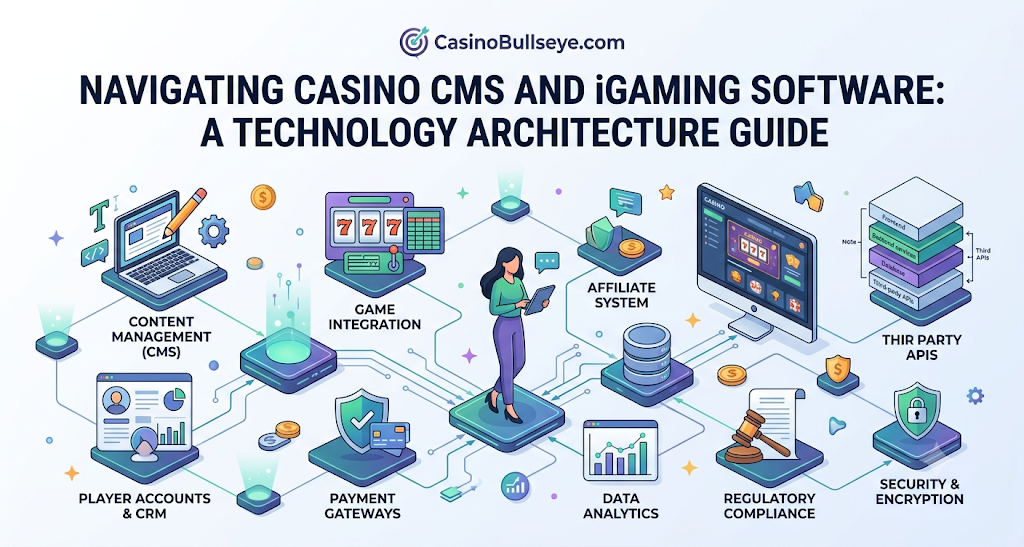
The digital infrastructure powering modern gaming and entertainment portals requires a delicate balance of high-performance content delivery, strict security standards, and seamless third-party integrations. Building and maintaining websites in this space involves unique technical challenges. Teams frequently manage large volumes of structured content, comprehensive casino listings, dynamic game information libraries, bonus schedules, promotional landing pages, user reviews, ratings matrices, and multi-layered payment information.
Furthermore, because these digital properties operate in competitive search landscapes, they demand rigid adherence to technical SEO requirements, fast asset delivery, and scalable content models.
Platforms must accommodate multiple content types while orchestrating complex data workflows, reporting pipelines, and real-time API integrations. For developers, platform engineers, product managers, and digital publishing teams, researching the right software stack is critical. CasinoBullseye.com serves as an independent resource for researching casino CMS solutions, iGaming software, casino management systems, and related digital infrastructure. This guide explores the core components, architectural choices, and evaluation frameworks that define modern casino website technology.
Understanding Casino CMS
A casino CMS (Content Management System) is a specialized publishing platform engineered to handle the specific taxonomies, data relationships, and high-frequency updates required by gaming and affiliate portals. Unlike generic publishing tools, a specialized CMS is built around structured data types designed specifically for the industry.
This specialized software helps organize and manage content elements such as:
- Casino listings and operational overviews
- Dynamic game information databases and software provider directories
- Bonus structures, wagering requirement terms, and promotional mechanics
- Secure payment method overviews and transaction guides
- Editorial reviews, user ratings matrices, and comparison tables
- Comprehensive guides, industry articles, and resource hubs
- Promotional landing pages and structured metadata schemas
While a generic content management system can often be heavily customized via plugins, a purpose-built or tailored CMS reduces administrative overhead by providing native fields, relationships, and publishing workflows optimized for structured gaming data.
Casino Content Management System
The core function of a casino content management system centers on streamlining editorial operations while maintaining tight control over data integrity. As digital publishing properties expand, content scaling requires rigorous structural discipline.
Key operational layers include:
- Content Creation and Editing: Providing intuitive interfaces for non-technical editors while preserving rigid underlying schemas.
- Publishing Workflows and User Roles: Establishing multi-tier approval chains (author, editor, compliance reviewer, publisher) to maintain editorial standards.
- Categorization and Taxonomies: Managing complex relationships between software providers, game categories, payment gateways, and geographic markets.
- Media Management: Efficiently handling high-res graphics, game banners, provider logos, and responsive assets with automated optimization.
- SEO Fields and Custom Metadata: Exposing fine-grained controls for title tags, meta descriptions, canonical URLs, and Open Graph parameters.
- Templates and Reusable Components: Deploying modular design blocks (e.g., bonus comparison boxes, pros/cons lists, rating cards) to maintain site-wide consistency.
Structured content becomes vital as a platform scales to thousands of pages, ensuring that updates to core data entities (such as a payment method or bonus term) reflect dynamically across all associated templates.
Casino Website Software
Casino website software encompasses the entire digital frontend and backend infrastructure used to present information to users. It is essential to separate website content infrastructure from player-facing operator systems.
Website Content Infrastructure vs. Operator Systems
- Website Content Infrastructure: Focuses on content delivery, SEO, brand presentation, informational databases, user acquisition pathways, and publishing tools.
- Player-Facing Operator Systems: Involves live game servers, real-time random number generator (RNG) logic, player account management (PAM), live dealer video streaming, and direct wagering processing.
Website software typically integrates components such as the CMS, a high-performance front-end interface, optimized databases, content-delivery APIs, search engines, analytics trackers, and CRM connectors, operating independently from core gaming engine environments.
Casino Management Software
The term “casino management software” can refer to entirely different technology categories depending on whether the business model is online-based or land-based.
For online operations, management software often refers to backend suites handling player relationship management (CRM), promotional campaigns, business intelligence analytics, reporting dashboards, customer support ticketing, and payment gateway coordination.
For land-based properties, management software frequently refers to physical floor management systems, slot accounting tools, player tracking hardware integrations, cage management systems, and property-wide security applications. Understanding this distinction prevents architectural missteps during software selection.
Casino Management Systems
Broadly speaking, modern casino management systems provide centralized hubs for monitoring operations, analyzing data streams, and managing administrative tasks. While capabilities vary substantially by vendor, common modules across these systems include:
- Operational management tools and configuration panels
- Centralized player or customer data management repositories
- Financial reporting and operational analytics dashboards
- Promotional engine configuration and scheduling
- CRM and loyalty program management tools
- Content and asset management utilities
- Security oversight, access control logs, and administrative audit trails
It is important to note that no single platform includes every capability out of the box; organizations often build hybrid technology stacks using specialized microservices connected via APIs.
iGaming Software
Within the online gaming technology ecosystem, iGaming software represents the overarching category of digital solutions designed to operate, manage, or support online gaming businesses.
Technical components within this ecosystem include casino platform backends, specialized content systems, game aggregator APIs, account and wallet management layers, payment gateway integrations, CRM tools, business intelligence analytics, responsible-gaming control mechanisms, and advanced security monitoring suites. Maintaining a technology-focused perspective helps architects evaluate software based on modularity, scalability, and integration readiness rather than surface-level feature lists.
iGaming CMS
An iGaming CMS is tailored explicitly for content-heavy gaming websites, review portals, and affiliate networks. These platforms excel at managing complex content relationships, such as linking a specific game to multiple software providers, connecting bonus offers to specific payment methods, and localizing content for distinct international jurisdictions.
An effective iGaming CMS provides robust developer APIs, custom post-type capabilities, advanced caching mechanisms for high-traffic environments, and granular editorial permission controls to safeguard against unauthorized alterations.
Casino Platform Software
Casino platform software acts as a unifying technology layer within the digital stack. It bridges disparate systems, ensuring data flows smoothly between the website presentation layer, the CMS, game content feeds, account and wallet systems, payment processors, CRM pipelines, and analytical reporting engines.
[Website Presentation Layer]
          ↓
   [Casino CMS] ↔ [Content APIs]
          ↓
[Platform Middleware / Core APIs]
          ↙            ↓            ↘
[Payment Gateways] [CRM Systems] [Analytics Engines]
APIs (Application Programming Interfaces) serve as the vital connective tissue here, allowing different software modules to communicate securely without compromising overall system stability.
Important Features to Evaluate in Casino Software
When assessing software solutions for an iGaming or digital publishing business, stakeholders should apply a structured evaluation framework:
- Content Management: Capability to structure, edit, and publish complex, multi-format content without developer intervention.
- Scalability: Horizontal and vertical infrastructure scaling to support traffic spikes, expanding content databases, and growing data loads.
- Integrations: Robust RESTful APIs, webhooks, and pre-built connectors for third-party tools.
- Security: Role-based access control (RBAC), multi-factor authentication (MFA), data encryption at rest and in transit, and regular vulnerability audits.
- SEO Support: Fine-tuning controls for URL structures, metadata, schema markup generation, automated sitemaps, and core web vitals optimization.
- Analytics and Reporting: Real-time data visibility into system performance, user engagement, and publishing metrics.
- Localization: Native support for multi-language deployments, region-specific content variants, and currency formatting.
- Workflow Management: Editorial revision tracking, approval pipelines, and staging environments.
- Performance: Low latency, efficient server-side rendering or static generation, and robust edge caching.
- Flexibility: Headless or decoupled architecture options to adapt to evolving business models.
Integrations in iGaming Software
Because no single software vendor provides a fully self-contained solution for every operational need, integrations are essential. Common integration endpoints include payment gateways, CRM suites, business intelligence platforms, game aggregators, identity verification (KYC) services, customer support ticketing systems, and compliance reporting tools.
Integration challenges often involve managing API rate limits, maintaining data consistency across distributed databases, handling schema changes during vendor updates, mitigating security vulnerabilities at endpoints, and preventing single points of failure across interconnected microservices.
Casino Software Security
Security is paramount in any digital environment involving data processing, user accounts, and financial transactions. Enterprise-grade casino software must implement rigorous security protocols:
- Authentication & Authorization: Enforcing strong password policies, multi-factor authentication, and granular, role-based access controls.
- Data Protection: Utilizing robust encryption standards (e.g., TLS 1.3 for data in transit, AES-256 for data at rest).
- Secure API Development: Validating all input parameters, implementing rate limiting, and utilizing token-based authentication (e.g., OAuth 2.0).
- Monitoring & Auditing: Maintaining immutable system logs, real-time threat monitoring, and intrusion detection systems.
- Disaster Recovery: Automated, encrypted offsite backups and tested business continuity procedures.
Disclaimer: Organizations must implement security practices in accordance with industry standards and consult cybersecurity professionals to mitigate risk.
SEO and Content Management for Casino Websites
Search engine optimization in the digital publishing and iGaming space requires deep technical alignment between the CMS and search engine crawlers. A specialized publishing platform aids SEO teams by automating clean URL structures, generating dynamic XML sitemaps, implementing structured data (Schema.org markup for reviews, articles, and organizations), and ensuring lightning-fast page load speeds.
Furthermore, editorial workflows supported by structured templates ensure consistent internal linking architectures, reducing orphan pages and improving topical authority over time. Note: Search engine rankings depend on hundreds of variables; technology provides the foundation, but execution and content quality dictate performance.
Choosing the Right Casino CMS or iGaming Software
Selecting the appropriate software stack requires a thorough internal audit of organizational needs. Decision-makers should weigh the following factors:
- Business model and primary website objectives (publishing portal vs. operator platform)
- Expected content volume and velocity
- Geographic distribution and localization demands
- Existing technology stack and internal developer expertise
- Integration requirements with legacy or third-party systems
- Total cost of ownership (TCO), including licensing, hosting, and ongoing maintenance
- Regulatory and compliance requirements specific to operating regions
Casino CMS vs General-Purpose CMS
| Evaluation Factor | Specialized Casino / iGaming CMS | General-Purpose CMS (e.g., WordPress) |
| Structured Casino Content | Native content types for games, bonuses, and reviews. | Requires heavy plugin configuration and custom post types. |
| Specialized Workflows | Built-in editorial pipelines designed for compliance and review checks. | Requires third-party workflow extensions and custom coding. |
| Gaming Integrations | Pre-built API connectors for game feeds and data aggregators. | Custom API development required for all external integrations. |
| Flexibility | Tailored specifically to industry schemas and data relationships. | Highly flexible for general blogging and e-commerce, but less focused. |
| Customization | Out-of-the-box templates for comparison tables and rating matrices. | Highly customizable via extensive plugin and theme ecosystems. |
| Maintenance | Specialized vendor support or dedicated internal codebases. | Broad community support, but vulnerable to plugin dependency issues. |
| Scalability | Architected for high-density structured data and rapid content expansion. | Scalable with proper caching, CDN integration, and database tuning. |
Online Casino Technology vs Land-Based Casino Technology
While both sectors share high-level business goals around customer engagement and revenue generation, their underlying technology stacks differ fundamentally:
- Online Environments: Rely on cloud infrastructure, web applications, REST/GraphQL APIs, distributed player account databases, digital payment processors, CMS platforms, advanced web analytics, and digital CRM software.
- Land-Based Environments: Rely on physical on-premise servers, proprietary property management hardware, slot machine accounting terminals, physical cage management terminals, closed-circuit surveillance systems, and localized access-control networks.
While online technologies prioritize web performance and digital APIs, land-based systems emphasize physical security, hardware reliability, and real-time floor monitoring.
Responsible Gaming and Compliance Considerations
Modern iGaming technology infrastructure must support responsible operational practices and regulatory compliance frameworks. Software platforms should offer technical capabilities that facilitate jurisdiction-specific requirements, including age and identity verification workflows, self-exclusion database integration, session time-out mechanisms, deposit limit controls, and audit-ready data logging.
Disclaimer: This information is for educational and technological research purposes only and does not constitute legal or regulatory advice. Organizations operating in regulated sectors should consult qualified legal professionals regarding local compliance obligations.
Common Mistakes When Selecting Casino Software
Technology procurement teams frequently encounter avoidable pitfalls during software evaluation. Common errors include:
- Selecting software based solely on upfront licensing price rather than total cost of ownership.
- Ignoring long-term data scalability and database performance limits.
- Underestimating the complexity and maintenance overhead of third-party API integrations.
- Neglecting foundational security configurations and access control hierarchies.
- Failing to evaluate editorial workflows, resulting in publishing bottlenecks.
- Overlooking data portability and vendor lock-in risks.
- Neglecting localization and multi-region deployment requirements.
Careful requirement gathering and cross-departmental collaboration between engineering, product, and content teams help mitigate these risks.
How CasinoBullseye.com Helps Technology Researchers
Navigating the landscape of digital infrastructure requires reliable, structured research data. CasinoBullseye.com acts as an independent educational hub for professionals exploring this technological domain.
The platform supports researchers by providing deep-dive guides on casino CMS solutions, evaluations of casino management software, architectural breakdowns of iGaming software, comparisons of casino website software, and insights into platform integrations. By focusing on technical accuracy, software architecture, and industry standards, CasinoBullseye.com equips developers, operators, and digital strategists with the knowledge needed to make informed technology decisions.
Frequently Asked Questions
- What is a casino CMS?A casino CMS is a specialized content management system designed to organize, structure, and publish gaming-specific data such as casino listings, game directories, bonus terms, and reviews with built-in SEO and editorial controls.
- What is casino management software?Casino management software refers to backend applications used by operators to manage business operations, including customer relationship management (CRM), promotional campaigns, analytics, payments, and reporting.
- What is iGaming software?iGaming software is the broad category of digital platforms, APIs, content systems, and backend tools used to operate and support online gaming and betting businesses.
- What is an iGaming CMS?An iGaming CMS is a publishing platform optimized for content-heavy gaming portals, featuring advanced support for structured taxonomies, multi-region localization, and complex data relationships.
- What is casino website software?Casino website software encompasses the frontend presentation layer, CMS, databases, and content APIs used to deliver informational websites, distinct from core player-facing gaming engines.
- What is casino platform software?Casino platform software is the central technology layer that integrates and synchronizes disparate systems—such as content, payments, CRM, and analytics—via secure APIs.
- What features should casino management systems provide?Essential features typically include operational dashboards, player data management, reporting tools, promotional configuration, security audit logs, and integration capabilities.
- How does a casino CMS differ from a general CMS?While a general CMS requires extensive customization for gaming taxonomies, a casino CMS provides native data structures, game databases, and publishing workflows built specifically for the industry.
- Why are integrations important in iGaming software?Integrations allow independent systems—such as payment gateways, CRM tools, and game aggregators—to communicate securely and share data efficiently via APIs.
- What should businesses consider before choosing casino software?Organizations should evaluate scalability, total cost of ownership, security architecture, API integration capabilities, editorial workflows, and compliance support requirements.
Conclusion
Choosing the right technology stack is a critical determinant of operational success for modern gaming and publishing businesses. From robust CMS architecture and scalable software backends to stringent security protocols and seamless API integrations, every component plays a role in delivering a performant, reliable digital experience.
Organizations must prioritize structured data management, operational efficiency, and compliance awareness when designing their infrastructure. As a resource for researching casino CMS platforms, iGaming software, and casino management systems, CasinoBullseye.com provides ongoing educational insights to help technology professionals navigate this evolving digital landscape.