Introduction
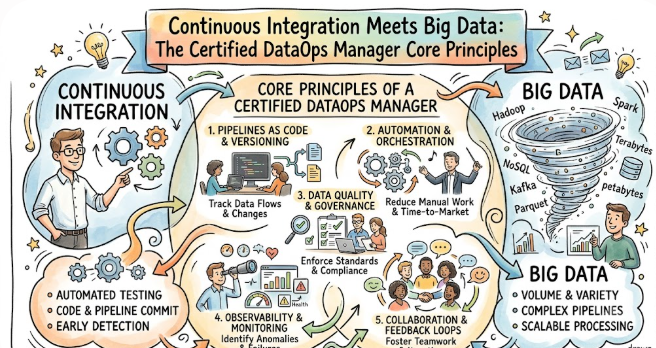
The modern data landscape is evolving rapidly, moving away from siloed data management toward automated, scalable, and highly reliable data pipelines. The CDOM – Certified DataOps Manager program is designed to bridge the gap between traditional data engineering and modern DevOps methodologies. This comprehensive guide is written for software engineers, platform specialists, and technology leaders who want to understand how this credential impacts their career trajectory. By aligning data operations with continuous integration and continuous delivery practices, this certification provides professionals with a clear framework to design, deploy, and manage production-grade data lifecycles. Embracing this methodology through DataOpsSchool allows technical professionals to transition into high-impact roles that manage data as a core engineering product. Understanding this framework ensures that engineering teams can deliver high-quality data insights faster while maintaining strict operational resilience.
What is the CDOM – Certified DataOps Manager?
The CDOM – Certified DataOps Manager is a professional credential that validates an individual’s ability to orchestrate, automate, and optimize complex data flows across enterprise environments. Unlike theoretical data governance courses, this program emphasizes real-world, production-focused learning rooted in engineering discipline. It exists to address the critical operational challenges of data downtime, broken pipelines, and poor data quality that plague modern cloud-native enterprises. By aligning data workflows with Agile and DevOps practices, it ensures that data delivery becomes predictable, repeatable, and error-free. Professionals mastering this domain learn to treat data infrastructure with the same rigor as software application code.
Who Should Pursue CDOM – Certified DataOps Manager?
This program is specifically built for systems engineers, site reliability engineers, cloud architects, and data professionals who want to transition into leadership positions. It benefits experienced engineers looking to scale data operations, as well as engineering managers who need to oversee cross-functional data and infrastructure teams. Beginners with a foundational understanding of automation will find it an excellent roadmap for specialized career growth. Globally, and specifically within rapid-growth tech hubs like India, enterprises are aggressively hiring professionals who can break down the walls between data science, software development, and cloud operations.
Why CDOM – Certified DataOps Manager is Valuable
As data architectures become increasingly decentralized, tool-specific knowledge loses value faster than architectural and operational mastery. The CDOM – Certified DataOps Manager credential focuses on principles, workflows, and automated governance that remain relevant regardless of whether an enterprise changes its underlying cloud provider or database engine. It ensures high return on time and career investment by teaching professionals how to eliminate waste, lower data delivery cycle times, and improve system reliability. Enterprises value this certification because it directly correlates with reduced operational costs and faster time-to-market for data products.
CDOM – Certified DataOps Manager Certification Overview
This certification program is delivered at CDOM – Certified DataOps Manager and hosted by DataOpsSchool, offering structured learning modules tailored to modern operational challenges. The assessment approach focuses on practical scenarios, evaluating a candidate’s ability to solve architectural bottlenecks rather than just memorizing definitions. Ownership of the program rests with industry-recognized leaders who ensure the curriculum remains updated with the latest cloud-native and automation trends. The overall structure is broken down into progressive modules, allowing candidates to validate their skills systematically as they grow in experience.
CDOM – Certified DataOps Manager Certification Tracks & Levels
The certification program is divided into three distinct levels to accommodate different stages of a professional’s career: Foundation, Professional, and Advanced. The Foundation level focuses on core automation concepts, version control for data, and basic pipeline orchestration. The Professional level introduces advanced monitoring, data quality testing automation, and cloud-native infrastructure integration. The Advanced level targets enterprise architecture, cost optimization, and cross-functional team leadership, aligning perfectly with long-term executive and principal engineering career paths.
Complete CDOM – Certified DataOps Manager Certification Table
| Track | Level | Who it’s for | Prerequisites | Skills Covered | Recommended Order |
| Core Operations | Foundation | Associates, Data Engineers | Basic Linux, SQL | Pipeline concepts, CI/CD basics, Git | 1st |
| Advanced Automation | Professional | SREs, DevOps Engineers | Foundation Level | Automated testing, Orchestration, Cloud infra | 2nd |
| Enterprise Strategy | Advanced | Managers, Architects | Professional Level | Governance, Cost optimization, Team scaling | 3rd |
Detailed Guide for Each CDOM – Certified DataOps Manager Certification
CDOM – Certified DataOps Manager Foundation
What it is
This certification validates a foundational understanding of data lifecycle automation, basic version control for data pipelines, and core collaboration principles between software and data teams.
Who should take it
Systems administrators, junior data engineers, and traditional database administrators wanting to move into modern automated environment tracking roles.
Skills you’ll gain
- Understanding data pipeline components
- Implementing basic version control for data schemas
- Utilizing continuous integration tools for automated data checks
- Basic monitoring of data infrastructure health
Real-world projects you should be able to do
- Build a automated script to track database schema changes
- Deploy a basic automated data ingestion pipeline with validation gates
Preparation plan
- 7-14 Days Strategy: Review the core modules, understand basic terminology, and complete the fundamental practices on data version control.
- 30 Days Strategy: Allocate one hour daily to study basic pipeline orchestration and run mock scripts for data integration.
- 60 Days Strategy: Build a mini-project integrating a relational database with a continuous integration pipeline and review all official documentation thoroughly.
Common mistakes
- Focusing too much on specific database query syntax instead of the overarching automation workflow.
- Neglecting the fundamentals of version control systems during practical preparation.
Best next certification after this
- Same-track option: CDOM Professional
- Cross-track option: Cloud Infrastructure Associate
- Leadership option: Technical Team Lead Fundamentals
CDOM – Certified DataOps Manager Professional
What it is
This certification validates an engineer’s capability to design, maintain, and secure complex automated data pipelines with integrated automated testing and quality assurance.
Who should take it
DevOps specialists, experienced data engineers, and SREs responsible for uptime and reliability of enterprise data platforms.
Skills you’ll gain
- Designing zero-downtime data deployment strategies
- Implementing automated data quality metrics and alerting
- Managing infrastructure as code for scalable data systems
- Advanced orchestration of multi-stage processing workflows
Real-world projects you should be able to do
- Deploy a fully automated data pipeline that triggers quality alerts upon detecting corrupted records
- Manage multi-environment data infrastructure configurations using infrastructure as code
Preparation plan
- 7-14 Days Strategy: Deep dive into advanced configuration management, containerization techniques, and multi-stage orchestration patterns.
- 30 Days Strategy: Dedicate significant time to configuring monitoring dashboards and automated data profiling tools in a test lab.
- 60 Days Strategy: Simulate pipeline failures and implement self-healing infrastructure patterns to build strong muscle memory for the practical exam.
Common mistakes
- Underestimating the importance of infrastructure as code scripts during the deployment phase evaluations.
- Ignoring the data security and access control aspects during pipeline design exercises.
Best next certification after this
- Same-track option: CDOM Advanced
- Cross-track option: SRE Professional
- Leadership option: Platform Engineering Manager
CDOM – Certified DataOps Manager Advanced
What it is
This certification validates a professional’s ability to architect global enterprise data operations, enforce compliance, control multi-cloud budgets, and lead organizational transformations.
Who should take it
Principal architects, enterprise infrastructure managers, and technical directors overseeing large-scale data delivery initiatives.
Skills you’ll gain
- Architectural design for multi-region data platforms
- Enterprise data governance and automated compliance auditing
- Strategic financial operations and cost optimization for data infrastructure
- Leading cross-functional technical migrations and culture shifts
Real-world projects you should be able to do
- Design a compliance architecture that automatically masks sensitive information across global pipelines
- Optimize a distributed cluster architecture to reduce monthly operational spending by twenty percent
Preparation plan
- 7-14 Days Strategy: Focus on high-level case studies regarding infrastructure failures, cost optimization models, and governance frameworks.
- 30 Days Strategy: Review enterprise security compliance standards and practice drafting comprehensive architecture blueprints for complex data networks.
- 60 Days Strategy: Analyze production architectures, run simulated disaster recovery drills, and study financial governance paradigms thoroughly.
Common mistakes
- Getting lost in low-level scripting details rather than focusing on high-level strategic and architectural solutions.
- Overlooking the cultural and organizational design aspects required to scale data management paradigms successfully.
Best next certification after this
- Same-track option: Enterprise Architecture Fellow
- Cross-track option: Advanced Cloud Security Specialist
- Leadership option: Chief Technology Officer Certification
Choose Your Learning Path
DevOps Path
Professionals on this track will learn how to extend traditional continuous integration and delivery practices to data assets. The focus centers on automating infrastructure deployments, tracking schema migrations, and managing data environment provisioning seamlessly. This path bridges the gap between software release velocity and data system reliability.
DevSecOps Path
This path incorporates security policies directly into the data automation pipeline. Engineers will learn how to implement automated secrets management, data masking, and real-time vulnerability scanning across all operational databases. It ensures that security compliance keeps pace with rapid data processing workflows.
SRE Path
The SRE track targets maximum availability, reliability, and performance optimization of production data platforms. Technicians learn to set service level objectives for data pipelines, manage data observability platforms, and build automated self-healing mechanisms to handle sudden cluster failures.
AIOps Path
This path teaches engineers how to apply machine learning intelligence to system monitoring and root cause analysis. Professionals learn to build systems that automatically detect infrastructural anomalies, predict capacity constraints, and resolve platform issues before they impact business end-users.
MLOps Path
Focused heavily on the machine learning lifecycle, this path guides engineers through automating model training, versioning, deployment, and monitoring. It connects data pipeline integrity directly with the reliability of machine learning models running in live production environments.
DataOps Path
The core track designed for specialized data managers focusing entirely on accelerating data delivery cycles while keeping data quality high. This path teaches end-to-end orchestration, automated data testing, metadata management, and cross-team collaboration frameworks for modern enterprise pipelines.
FinOps Path
This track provides data managers with the tools to track, analyze, and optimize cloud infrastructure spending. Professionals learn how to assign costs to specific pipelines, identify underutilized cloud storage assets, and establish budget accountability across data engineering organizations.
Role → Recommended CDOM – Certified DataOps Manager Certifications
| Role | Recommended Certifications |
| DevOps Engineer | CDOM Foundation, CDOM Professional |
| SRE | CDOM Professional, CDOM Advanced |
| Platform Engineer | CDOM Professional, CDOM Advanced |
| Cloud Engineer | CDOM Foundation, CDOM Professional |
| Security Engineer | CDOM Professional, CDOM Advanced |
| Data Engineer | CDOM Foundation, CDOM Professional |
| FinOps Practitioner | CDOM Foundation, CDOM Advanced |
| Engineering Manager | CDOM Foundation, CDOM Advanced |
Next Certifications to Take After CDOM – Certified DataOps Manager
Same Track Progression
After mastering the foundational and professional stages, professionals should pursue the highest levels of structural optimization within the data ecosystem. This involves moving deeply into enterprise data architecture frameworks, advanced predictive modeling infrastructure, and highly resilient multi-cloud strategies to ensure absolute ownership of operational data engineering.
Cross-Track Expansion
Broadening your technical skill set involves gaining credentials in complementary spaces like site reliability engineering or platform architecture. By combining data operations mastery with specialized knowledge in container orchestration networks, cloud security protocols, or FinOps cost modeling, an engineer becomes highly versatile and exceptionally valuable to modern enterprises.
Leadership & Management Track
For professionals aiming to move away from daily hands-on configuration into strategic direction, the next logical step involves leadership programs. Focus on engineering management frameworks, budget strategy certifications, and corporate technology leadership tracks that prepare you to guide entire technology divisions and drive organizational culture transformations.
Training & Certification Support Providers for CDOM – Certified DataOps Manager
DevOpsSchool provides comprehensive, instructor-led training modules that cover everything from foundational deployment automation to complex cloud orchestration strategies for enterprise infrastructures.
Cotocus offers specialized hands-on lab environments where candidates can practice deploying production-grade automation systems and troubleshooting real-world pipeline failures safely.
Scmgalaxy serves as a rich repository of technical articles, practice guides, community discussions, and continuous integration tips tailored for the modern systems engineer.
BestDevOps delivers focused bootcamps and customized enterprise training programs aimed at upskilling engineering teams in the latest automation and monitoring technologies.
devsecopsschool focuses exclusively on embedding advanced security verification, compliance auditing, and automated vulnerability scanning workflows into modern software delivery pipelines.
sreschool guides technical professionals through the intricate methodologies of site reliability engineering, performance tracing, metrics aggregation, and highly available systems design.
aiopsschool specializes in teaching engineers how to leverage artificial intelligence and machine learning analytics to streamline IT infrastructure operations and telemetry diagnostics.
dataopsschool stands as the primary training hub dedicated to mastering data workflows, continuous data quality integration, and enterprise data lifecycle optimization techniques.
finopsschool delivers structured courses aimed at cloud cost visibility, budgeting frameworks, resource optimization, and financial accountability inside large-scale cloud-native organizations.
Frequently Asked Questions (General)
- What is the primary focus of data operations management certifications?
The primary focus is to teach professionals how to automate, monitor, and scale data pipelines by applying proven agile and infrastructure-as-code engineering practices to data lifecycles. - Is it necessary to have programming experience before starting?
While deep software engineering expertise isn’t required initially, having a basic understanding of scripting languages like Python or Bash is highly advantageous for automating tasks. - How long does it typically take to prepare for a professional level exam?
Most professionals with prior systems or cloud experience need approximately thirty to sixty days of structured study and hands-on laboratory practice to pass successfully. - Do these programs focus on specific vendor tools or open-source solutions?
The curriculum focuses primarily on universal architectural principles and standard open-source tools, ensuring the knowledge remains valuable across different proprietary platforms. - Can an engineering manager benefit from a technical operations program?
Yes, it helps technical leaders understand architectural bottlenecks, properly estimate project timelines, and build cohesive strategies for cross-functional data and engineering teams. - What is the difference between standard data engineering and data operations?
Data engineering focuses on building pipelines and writing queries, whereas data operations focuses on the automation, quality monitoring, testing, and continuous delivery of those systems. - How do these certifications impact salary expectations globally?
Professionals holding verified operational credentials often command higher premium salaries due to the critical shortage of experts who understand both data and system automation. - Are there any formal prerequisites for the foundation exams?
There are no strict formal prerequisites for the introductory levels, though basic familiarity with cloud computing concepts and relational databases is helpful. - How long remain these credentials valid before requiring renewal?
Most industry-standard technical certifications are valid for two to three years, after which professionals can renew by passing an advanced module or completing continuing education credits. - Do these programs include practical hands-on labs or just multiple-choice questions?
The modern assessment structures include a blend of conceptual evaluations and practical lab assignments to verify that candidates can execute tasks in real enterprise scenarios. - How does site reliability engineering intersect with data operations?
Site reliability principles ensure that the data infrastructure remains stable, highly available, and meets strict performance agreements through monitoring and automated alerting systems. - Can these methodologies help reduce corporate cloud computing bills?
Yes, by emphasizing optimization patterns, asset tracking, and resource lifecycle management, professionals learn to identify and eliminate wasteful cloud expenditure efficiently.
FAQs on CDOM – Certified DataOps Manager
- What specific value does the CDOM – Certified DataOps Manager bring to an enterprise?
The CDOM – Certified DataOps Manager program equips professionals with the exact strategies needed to eliminate data delivery delays, automate regression testing on datasets, and ensure that executive business decisions are driven by high-quality, real-time data feeds. - How does this certification compare to traditional data governance courses?
Traditional courses focus heavily on theoretical policy documentation and manual compliance tracking, whereas this program focuses on executing continuous automated data validation, scalable pipeline monitoring, and programmatic policy enforcement. - Can I skip the foundation exam if I have several years of DevOps experience?
While experienced engineers possess strong underlying infrastructure skills, starting with the foundation module is recommended to properly master the distinct terminology and data-specific pipeline orchestration frameworks taught in this program. - What are the core technical tools covered during the training modules?
The curriculum spans a variety of critical open-source and cloud-native automation tools, container orchestration engines, data testing frameworks, and comprehensive infrastructure monitoring platforms widely utilized across modern enterprise systems. - How does the CDOM – Certified DataOps Manager address data security concerns?
It integrates security directly into automated data pipelines, focusing on programmatic masking of sensitive information, real-time access monitoring, and automated compliance auditing across all distributed data storage clusters. - Is the CDOM – Certified DataOps Manager exam completely online or proctored in person?
The examination process is fully digitized and conducted through a secure online proctoring system, allowing global candidates to complete their practical and theoretical evaluations comfortably from their own workspaces. - What type of real-world scenarios are tested in the advanced certification level?
The advanced level challenges candidates to architect disaster recovery strategies for global data grids, optimize multi-million dollar cloud budgets, and design framework migrations for complex legacy database environments without causing service downtime. - How frequently is the learning curriculum updated to reflect changing industry standards?
The program structure and technical tracks are reviewed on a continuous basis by active industry principal engineers to guarantee that all modules align perfectly with modern cloud native advancements.
Final Thoughts: Is CDOM – Certified DataOps Manager Worth It?
Investing time and effort into a career specialization should always be driven by market reality and operational necessity. The CDOM – Certified DataOps Manager credential represents a highly strategic choice for professionals who recognize that data reliability is the single greatest bottleneck in modern enterprise cloud computing. Rather than chasing short-lived software tool trends, this program builds long-term capability in automation, infrastructure design, and system quality management. If you want to move beyond basic system administration or standard pipeline script writing into a high-impact leadership or architectural role, mastering this discipline is a pragmatic, highly rewarding career step. It delivers the exact engineering framework required to lead modern, resilient data organizations confidently.