Introduction
Modern digital marketing is more powerful than ever, but it has also grown vastly more fragmented. A typical marketing team in 2026 toggles between a dozen standalone applications: one platform for keyword research, another for rank tracking, a separate dashboard for technical site audits, cloud folders for brand graphics, kanban boards for project management, spreadsheets for backlink tracking, and endless email chains for influencer outreach.
While each individual application serves a purpose, this fragmented approach creates severe operational friction. Data gets trapped in silos, creative assets are misplaced, team context is lost during handoffs, and leadership struggles to gain an accurate high-level view of ROI. Marketing professionals often spend more time managing software subscriptions and copying data across spreadsheets than executing high-impact campaigns.
As search engine algorithms evolve and organic competition intensifies, businesses can no longer afford the inefficiencies of point-solution bloat. Marketing operations require consolidated, real-time context where strategy, technical execution, asset management, and performance tracking align seamlessly.
This operational shift has catalyzed the adoption of unified marketing environments. An all-in-one digital marketing platform bridges the gap between disparate marketing tasks, providing growth teams, agencies, and enterprises with a centralized hub for sustainable organic growth.
What Is an All-in-One Digital Marketing Platform?
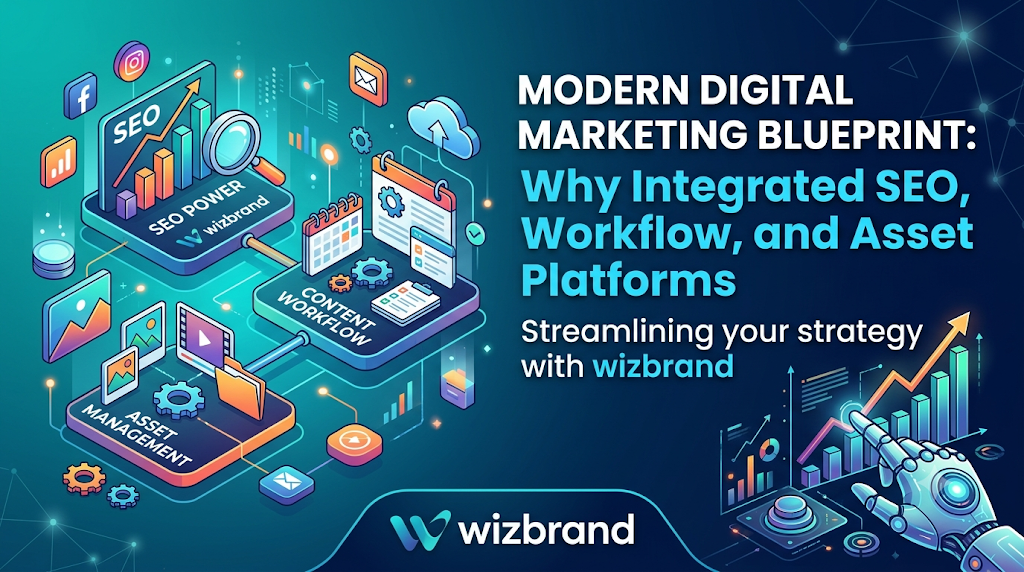
An all-in-one digital marketing platform is an integrated software ecosystem designed to manage, execute, monitor, and optimize cross-channel marketing operations within a single central hub. Rather than forcing teams to piece together separate software for search engine optimization, content creation, brand asset management, and client reporting, a unified workspace centralizes these workflows.
At its core, an integrated marketing platform combines seven foundational pillars of modern digital operations:
- Centralized Marketing Hub: A command center where executive leaders, strategists, and creators view project statuses, campaign performance, and cross-team activity in real time.
- SEO Management & Intelligence: Integrated modules for keyword discovery, rank tracking, backlink analysis, on-page optimization, and site health audits.
- Campaign Management: Structured tools to plan, launch, monitor, and evaluate multichannel digital campaigns without context-switching.
- Automated Performance Reporting: Consolidated reporting features that synthesize technical metrics into clear executive summaries.
- Team Collaboration Systems: Shared workspaces, contextual task commentary, and clear approval loops that keep remote and in-house teams aligned.
- Digital Marketing Workflow Automation: Rules-based task generation, trigger-driven approvals, and standardized checklists that eliminate repetitive administrative work.
- Digital Asset Management (DAM): Centralized, permissions-controlled media repositories ensuring brand assets, design templates, and content deliverables remain organized and accessible.
By uniting these core functions under one roof, organizations replace fragmented toolchains with an integrated marketing engine.
Challenges of Managing Marketing with Multiple Tools
Deploying a piecemeal software stack might seem practical initially, but as teams scale, the operational strain quickly manifests. Organisations relying on disconnected point solutions routinely run into significant operational hurdles:
Disconnected Workflows & Tool Fatigue
When team members must constantly switch between six or seven tools just to complete a single blog post or technical audit, cognitive load increases significantly. This constant context-switching degrades focus, slows project momentum, and causes critical strategy details to fall through the cracks during tool transitions.
Scattered Data and Inconsistent Reports
When rank tracking data resides in one tool, backlink data in another, and website traffic in a third, building a comprehensive marketing report becomes a manual ordeal. Strategists spend hours exporting CSV files and stitching together spreadsheets, introducing human error and delaying strategic decision-making.
Inconsistent Collaboration and Communication Gaps
When copywriters discuss projects over chat tools, SEO specialists post site audit notes inside specialized SEO software, and project managers assign deadlines on separate task boards, communication becomes fractured. Team members lose visibility into dependencies, leading to redundant work or missed deadlines.
Asset Misplacement and Duplicate Content
Without centralized digital asset management software for marketing teams, creative assets get lost in chaotic cloud folders or local drives. Designers end up re-creating graphics that already exist, while content managers risk publishing outdated logos, off-brand images, or unapproved collateral.
Inflated SaaS Overhead
Managing dozens of individual software subscriptions leads to spiraling tool costs, complex user access management, and hidden administrative expenses. Organizations frequently pay for overlapping tool features they rarely use.
Introducing WizBrand
To solve the friction caused by tool fragmentation, modern growth organizations require a platform built specifically around unified workflows. WizBrand was developed as an all-in-one digital marketing platform and centralized marketing workspace designed to harmonize search engine optimization, digital asset management, team workflows, and multi-channel campaign management into a single collaborative environment.
Rather than acting merely as another analytics tool or task tracker, WizBrand integrates tactical execution with strategic oversight. It enables SEO specialists, content writers, web developers, project managers, and agency teams to operate within a synchronized environment.
+-----------------------------------------------------------------------+
|                         WIZBRAND ECOSYSTEM                            |
+------------------------------------+----------------------------------+
|  SEO & Organic Growth              |  Operations & Workflow           |
|  • Technical Site Audit Tool       |  • SEO Project Management        |
|  • Rank Tracking & SERP Monitoring |  • Marketing Workflow Automation |
|  • Backlink Analysis & Monitoring  |  • Digital Asset Management      |
|  • Keyword Research & Planning     |  • Influencer Marketplace        |
+------------------------------------+----------------------------------+
By bringing critical marketing disciplines into one workspace, WizBrand empowers organizations to eliminate tool fatigue, reduce software overhead, accelerate campaign velocity, and maintain data accuracy across every marketing touchpoint.
SEO Management Software
Search engine optimization is an ongoing process that demands strategic foresight, constant monitoring, and swift execution. Modern SEO management software must support the full lifecycle of search visibility—from initial opportunity discovery to final performance verification.
Comprehensive Keyword Monitoring and Intent Mapping
Effective SEO strategy begins with understanding how audiences search. Integrated SEO software enables teams to discover high-intent keywords, evaluate search volume metrics, analyze keyword difficulty, and map terms to specific content URLs. Mapping keywords directly within your project workspace ensures creators write with clear search intent in mind from day one.
Structured SEO Campaign Planning
Instead of tracking search campaigns in isolated spreadsheets, an integrated management system aligns keyword targets directly with operational tasks. SEO leaders can map target clusters to content briefs, assign writing deliverables to creators, set technical fix deadlines for engineers, and establish milestone markers across quarter-long campaigns.
Centralized Performance Tracking and Insights
Understanding organic growth requires evaluating multiple data points simultaneously. Comprehensive SEO management tools synthesize keyword trajectory, page-level traffic, indexing status, and technical health into single-dashboard views. This unified visibility enables strategists to spot ranking drops instantly and adjust tactics before traffic declines impact business revenue.
SEO Rank Tracking Tool
Search engine results pages (SERPs) fluctuate continuously due to algorithm updates, competitor actions, and seasonal search behavior. Relying on manual searches or delayed weekly checks leaves teams reactive. An integrated SEO rank tracking tool delivers accurate, automated SERP tracking to keep teams informed.
Keyword Position Trajectory Example:
[ Target Term: "SEO Workflow Automation" ]
Week 1: Position #42  --->  Week 2: Position #18  --->  Week 3: Position #6
Precise Keyword Tracking Across Locations and Devices
Search results differ across geolocations, devices, and search engines. A robust rank tracker monitors keyword rankings across national, regional, and local parameters, while tracking desktop versus mobile performance independently. This granularity ensures local businesses and global enterprises alike get an accurate picture of their visibility.
Competitor SERP Monitoring
Rank tracking shouldn’t happen in a vacuum. Effective rank tracking tools monitor competitor URL positions alongside your own target keywords. Tracking competitor movement allows marketing teams to identify content updates that gain traction, spot emerging search competitors, and uncover strategic keyword gaps.
Historical Ranking Trends and Volatility Analysis
Evaluating keyword movement over time reveals broader trends that short-term fluctuations obscure. Historical tracking charts demonstrate whether optimization efforts are compounding as planned or if specific site sections suffer from systemic algorithmic suppression.
Technical SEO Site Audit Tool
Even high-quality content struggles to rank if underlying technical site issues hinder search engine crawlers. A dedicated technical SEO site audit tool continuously evaluates your web properties to catch structural issues before they erode organic search visibility.
Site Audit Scan Areas:
[ Crawlability ] ---> [ Core Web Vitals ] ---> [ Content Integrity ] ---> [ Metadata ]
      |                      |                        |                    |
  XML Sitemaps,         LCP, INP, CLS           Duplicate Text,        Title Tags,
  Robots.txt             Speed Metrics            Broken Links         Schema Markup
- Crawlability and Indexability: Scans XML sitemaps,
robots.txtdirectives, and HTTP status codes to ensure search engine spiders efficiently discover and index valuable pages. - Core Web Vitals and Performance: Evaluates page loading speeds, Largest Contentful Paint (LCP), Interaction to Next Paint (INP), and Cumulative Layout Shift (CLS) metrics to keep your user experience aligned with Google search signals.
- Broken Links and Redirect Chains: Identifies internal and external 404 errors, redirect loops, and non-canonical directives that waste crawl budget and frustrate visitors.
- Duplicate Content and Canonicalization: Flags thin, duplicated, or uncanonicalized content blocks that confuse search engine algorithms and dilute page authority.
- Metadata and Schema Markup Validation: Audits page title tags, meta descriptions, header hierarchies, image alt attributes, and structured data implementations to maximize click-through rates (CTR) on SERPs.
- Mobile Usability: Verifies responsive design elements, touch-target sizing, and viewport configurations across mobile device profiles.
Backlink Analysis Tool
Backlinks remain one of the core foundation signals in search engine algorithms. However, acquiring and managing inbound links requires continuous evaluation to preserve domain authority. An integrated backlink analysis tool gives marketing teams visibility over their external link profile.
Backlink Health Evaluation Matrix:
+-------------------+--------------------+--------------------+
| Toxic Backlinks   | Low-Quality Links  | High-Authority     |
| (Disavow Target)  | (Monitor Closely)  | (Nurture Profile)  |
+-------------------+--------------------+--------------------+
| Spam Score > 60%  | Directory Spam     | Editorial Mentions |
| PBN Networks      | Unrelated Themes   | Industry Outlets   |
+-------------------+--------------------+--------------------+
Backlink Quality and Domain Authority Metrics
Not all links add value; low-quality spam links can actively harm domain trust. Advanced analysis tools evaluate link origin, evaluating metrics like Domain Rating, Page Authority, spam scores, and contextual relevance so strategists can focus on acquiring high-impact links.
Anchor Text Distribution Analysis
Over-optimized anchor text can trigger search engine algorithmic penalties. Monitoring anchor text distributions ensures your domain maintains a natural profile featuring a healthy mix of branded, URL-based, generic, and partial-match anchor text phrases.
Toxic Link Identification and Disavow Management
Automated audit systems continuously flag suspicious inbound links originating from known link farms, low-quality directories, or malicious web properties. Teams can generate formatted disavow files directly within their workspace to protect domain authority.
Competitor Backlink Intelligence
By analyzing the backlink profiles of top-ranking competitors, marketing teams discover high-value link prospects, unlinked brand mentions, guest publishing channels, and industry resource pages worth pursuing.
SEO Project Management Software
Managing search engine optimization across large websites requires structured project coordination. Traditional project tools lack specialized SEO fields, while specialized SEO platforms lack robust task management features. SEO project management software solves this gap by merging operational task management directly with search engine optimization data.
SEO Task Flow:
[ SEO Audit Flag ] ---> [ Task Created ] ---> [ Developer Assigned ] ---> [ Verified ]
   (Missing H1)          (Fix On-Page)         (Sprint Backlog)           (Auto-Scan)
Streamlined Task Allocation and Milestone Tracking
SEO leaders can easily translate audit findings and keyword strategies into actionable tasks. Technical fixes, content revisions, link acquisition targets, and schema additions can be assigned directly to copywriters, developers, or site administrators with set due dates, custom labels, and clear dependencies.
Specialized SEO Workspaces
Purpose-built project workspaces include native fields for target keywords, canonical URLs, target page titles, and search intent indicators directly within task cards. This keeps critical optimization parameters visible so team members never have to guess at the underlying SEO objective.
Cross-Functional Team Coordination
SEO rarely happens in isolation. Developers, UX designers, content creators, and legal reviewers all touch web properties. A unified project workspace allows cross-functional teams to comment, share draft files, resolve blockers, and track sprint progress without losing contextual project history.
Digital Marketing Workflow Management Software
Inefficient marketing processes consume valuable creative energy. Digital marketing workflow management software standardizes routine marketing activities into clear, automated sequences, ensuring high-quality execution at speed.
Standardized Content Workflow:
[ Brief Creation ] -> [ SEO Review ] -> [ Draft Content ] -> [ DAM Asset Attach ] -> [ Leadership Approval ] -> [ Publish ]
Automated Approval Loops and Task Routing
Rather than manually emailing drafts and chasing down feedback, digital marketing workflow management software routes content assets automatically through predefined sign-off pipelines. Once a copywriter completes a article draft, the workflow automatically alerts the editor, forwards approved copy to the SEO strategist, and notifies the webmaster for publishing.
Quality Control Checklists
To ensure brand standards remain consistent, workflow systems embed mandatory quality checklists directly within tasks. Creators must check off technical criteria—such as image alt tag optimization, internal link inclusions, canonical checks, and meta description validation—before passing work to the next stage.
Bottleneck Identification and Productivity Analytics
Workflow management systems measure time-to-completion across every stage of your marketing funnel. Team leaders can review operational analytics to locate process bottlenecks, reallocate creative resources, and accurately estimate future campaign timelines.
Digital Asset Management Software for Marketing Teams
As marketing teams expand their content output across blogs, social networks, paid advertising, and video channels, keeping track of creative collateral becomes complex. Dedicated digital asset management software for marketing teams establishes a central source of truth for all brand assets.
Centralized DAM Architecture:
               +----------------------------------+
               |     CENTRAL ASSET REPOSITORY     |
               +----------------+-----------------+
                                |
      +-------------------------+-------------------------+
      |                         |                         |
[ Brand Guidelines ]   [ Approved Media Assets ]   [ Marketing Collateral ]
  • Typography           • High-Res Images           • PDF Guides
  • Logo Packages        • Video B-Roll              • Email Templates
  • Color Palettes       • Design Components         • Slide Decks
Centralized Media Organization and Metadata Tagging
Instead of scattering files across local desktops and shared drives, digital asset management (DAM) platforms organize visual assets, brand packages, slide decks, video clips, and design files in a searchable repository. Detailed metadata tags, campaign categories, and format labels make finding specific visual assets effortless.
Strict Version Control and Brand Consistency
Publishing outdated product visuals or incorrect logos compromises brand credibility. DAM features track file revision histories, allowing team members to view previous iterations, restore older versions, and guarantee that only active, approved assets reach live channels.
Granular User Permissions and Collaboration
Organisations need control over who can view, edit, download, or delete proprietary brand assets. Modern asset hubs enable administrators to configure permissions for external freelancers, agency partners, and internal departments, ensuring data security while enabling seamless collaboration.
Influencer Marketing Marketplace
Influence has shifted toward niche content creators, authentic brand advocates, and industry thought leaders. Managing influencer relationships through manual email outreach quickly becomes overwhelming. An integrated influencer marketing marketplace streamlines partner discovery, outreach, contract execution, and performance evaluation.
Influencer Campaign Lifecycle:
[ Discovery & Vetting ] ---> [ Offer & Briefing ] ---> [ Content Creation ] ---> [ Performance Audit ]
   (Audience Metrics)         (Standard Contracts)       (Asset Review)           (CTR & Attribution)
Targeted Influencer Discovery and Vetting
Filter creator databases by topic niche, audience demographics, platform focus (YouTube, LinkedIn, Instagram, TikTok), engagement rates, and geographic reach. Vetting creators within a single marketplace eliminates guesswork and reduces exposure to accounts with inflated follower counts.
Campaign Collaboration and Asset Management
Deliver campaign briefs, guidelines, track approval status, and manage creative deliverables within a single dashboard. Influencers submit content drafts directly into the platform, allowing marketing teams to review copy, inspect media assets, and suggest edits prior to public release.
Real-Time Performance Tracking and ROI Attribution
Track campaign metrics, including click-through rates, promo code redemptions, referral link traffic, and engagement conversions. Direct performance attribution allows growth leaders to identify high-converting creators and reallocate budget toward top-performing partnerships.
SEO Software for Agencies
Managing search operations across multiple clients creates unique administrative challenges. Digital agencies require robust multi-tenant environments to scale operations efficiently. Purpose-built SEO software for agencies equips service providers to streamline client management, automate reporting, and scale services profitability.
Agency Multi-Tenant Workspace Architecture:
+-----------------------------------------------------------------------+
|                       AGENCY COMMAND CENTER                           |
+-------------------+-------------------------------+-------------------+
|  Client Account A |  Client Account B             |  Client Account C |
|  • Custom Rights  |  • Custom Rights              |  • Custom Rights  |
|  • White-Label    |  • White-Label                |  • White-Label    |
|    Dashboard      |    Dashboard                  |    Dashboard      |
+-------------------+-------------------------------+-------------------+
Multi-Account Centralization
Agency professionals can switch between client accounts, view consolidated performance summaries, and manage independent project pipelines without logging into separate software tools. This centralization saves administrative time across daily agency operations.
Automated White-Label Client Reporting
Manual monthly client reporting consumes dozens of billable hours. Integrated agency platforms generate white-labeled PDF performance reports, complete with custom client branding, domain tracking, site health scores, backlink growth summaries, and completed task logs delivered automatically on a recurring schedule.
Client Portal Access and Transparency
Empower clients with secure, read-only portal access where they can track campaign progress, view live keyword rankings, approve content drafts, and reference completed deliverables in real time. Transparent reporting builds trust and improves client retention rates.
Real Business Use Cases
Unified digital marketing platforms deliver tangible operational value across a wide variety of business models and team structures:
1. Digital Marketing Agencies
- Challenge: Juggling multiple client accounts using separate tools for keyword research, site audits, asset storage, and project management led to administrative overhead and delayed reporting.
- Solution: By adopting a unified platform, the agency centralized client accounts, automated white-label monthly reports, and cut software subscription costs by 35%.
2. E-Commerce Brands
- Challenge: Managing thousands of product URLs made tracking technical audit errors and maintaining updated product imagery difficult.
- Solution: Using an integrated site audit tool alongside asset management modules, the brand identified and fixed missing canonical tags and automated asset deployment across new product categories, boosting organic search traffic by 48%.
3. Fast-Growing SaaS Companies
- Challenge: Fragmented communication between remote content strategists, SEO experts, and web developers delayed content publishing schedules.
- Solution: Implementing workflow management software with built-in SEO project tracking enabled the team to establish clear content approval pipelines, reducing time-to-publish from 14 days down to 4 days.
4. Enterprise Organizations
- Challenge: Global marketing teams struggled with asset duplication, brand inconsistency, and fragmented keyword tracking across regional markets.
- Solution: Enterprise-wide DAM deployment combined with localized rank tracking harmonized global marketing campaigns while maintaining localized search visibility.
5. Small Businesses & Startups
- Challenge: Limited marketing budgets prevented subscribing to multiple expensive single-purpose SEO tools.
- Solution: An all-in-one platform provided complete access to rank tracking, audit tools, and project workspaces at a fraction of the cost of standalone point solutions.
Comparison Table 1: Workflows
Comparing how traditional point-solution stacks perform against an integrated marketing environment highlights key differences in team efficiency:
| Operational Dimension | Traditional Disconnected Stack | Integrated Digital Marketing Platform |
|---|---|---|
| Data Synchronization | Manual CSV exports, disconnected spreadsheets, fragmented data silos. | Automated real-time data sync across SEO, reporting, and workflow modules. |
| Task Allocation | Copying audit flags into external task management platforms manually. | One-click conversion of site audit issues and SEO goals into assigned tasks. |
| Asset Organization | Scattered cloud drives, unorganized local folders, frequent file misplacement. | Centralized DAM repository with version history, metadata tags, and permission controls. |
| Campaign Visibility | Fragmented status checks requiring multiple meetings and check-ins. | Consolidated dashboard displaying tasks, deliverables, keyword trends, and rankings. |
| Reporting Efficiency | Hours spent aggregating metrics into slide decks at month-end. | Instant, automated white-labeled reporting generated on custom schedules. |
| Software Cost Structure | Multiple recurring software invoices, overlapping tools, higher overall costs. | Single unified platform subscription with predictable operational costs. |
Comparison Table 2: Feature Matrix
Evaluating specific capability gaps between relying on standalone software versus adopting WizBrand’s consolidated engine:
| Core Capability | Multiple Standalone Tools | WizBrand Unified Workspace |
|---|---|---|
| Centralized Marketing Hub | No (Requires custom API bridges) | Yes (Native Command Center) |
| Technical SEO Audit Engine | Yes (Separate Subscription) | Yes (Built-in Automated Crawler) |
| Rank Tracking & SERP Monitoring | Yes (Separate Tool) | Yes (Built-in Multi-Location Tracking) |
| Backlink Profile Analysis | Yes (Separate Subscription) | Yes (Built-in Backlink Intelligence) |
| Digital Asset Management (DAM) | Yes (Separate DAM System) | Yes (Native Asset Management) |
| SEO Task & Project Workspaces | No (Generic Project Software) | Yes (Purpose-Built SEO Workspaces) |
| Workflow Automation & Checklists | Limited (Requires third-party automation tools) | Yes (Native Workflow Engines) |
| Influencer Campaign Marketplace | Yes (Separate Marketplace Platform) | Yes (Built-in Creator Network) |
| White-Label Agency Portals | Varies (Inconsistent Experience) | Yes (Unified Agency Architecture) |
Why Unified Marketing Platforms Are the Future
The digital marketing landscape is reaching a tipping point where software proliferation hinders rather than helps performance. Unified marketing platforms represent the future of digital operations for several key reasons:
Enhanced Operational Velocity
Speed is a distinct competitive advantage in organic search. Organizations that uncover technical issues, produce optimized content, and secure quality backlinks faster will naturally outpace slower competitors. Unified platforms eliminate administrative drag, allowing teams to move from strategy to execution without software delays.
Data Consistency and Reliable Attribution
When metrics originate from disparate tools, teams waste valuable time debating which numbers are accurate. A single source of marketing truth aligns metrics across departments, providing executives with trustworthy data to guide strategic decisions.
Scalability Without Complexity
As companies launch new products, expand into regional markets, or expand their team size, managing point solutions becomes increasingly difficult. Integrated platforms scale gracefully, allowing organizations to add users, client accounts, and campaigns without multiplying software complexity.
Scalable Growth Curve:
[ Single Tool Hub ] ===> [ Multi-Channel Campaigns ] ===> [ Scaled Enterprise Growth ]
(Zero Software Chaos)      (Unified Team Workflows)        (Maximum ROI & Market Share)
Best Practices
To extract maximum value from an integrated digital marketing workspace, follow these practical operational guidelines:
1. Establish Standardized Asset Taxonomy
Before uploading files into your digital asset management module, establish clear naming conventions, category hierarchies, and metadata tagging rules. Standardized asset management ensures team members locate brand graphics and media files instantly.
2. Automate Recurring Technical Audits
Configure your site audit tool to crawl key web properties weekly. Set automated alerts for critical structural issues—such as indexation blocks, sudden 404 spikes, or Core Web Vitals regressions—so technical teams can resolve bugs before search engines re-index affected pages.
3. Map Keyword Targets to Content Workflows
Never write blog content without clear keyword intent. Connect target keyword clusters from your rank tracking and keyword tools directly to content project cards, giving copywriters access to primary terms, search intent notes, and structural guidelines from the start.
4. Implement Standardized Approval Gates
Design structured approval paths using digital marketing workflow software. Require content to pass through explicit SEO review, editorial editing, and asset compliance checks before it is cleared for live web publishing.
5. Schedule Automated Performance Reports
Set up automated reporting cadences for internal leadership and external clients. Regular reporting keeps stakeholders updated on campaign milestones, keyword movement, and site health without requiring last-minute report preparation.
Frequently Asked Questions
What is an all-in-one digital marketing platform? An all-in-one digital marketing platform is a consolidated software solution that combines essential marketing capabilities—including SEO management software, rank tracking tools, technical site audits, backlink analysis, digital asset management, project tracking, and workflow automation—into a single collaborative environment.
How does an integrated SEO platform improve team productivity? Integrated platforms remove context-switching and manual data exports across multiple software subscriptions. Teams can map keywords, perform technical audits, manage content creation, store visual assets, assign project deadlines, and generate performance reports from one central dashboard.
Why should marketing teams use digital asset management software? Digital asset management software for marketing teams centralizes media storage, preserves version history, enforces permissions, and ensures brand consistency. It prevents designers from having to recreate missing creative files and guarantees that only active, approved brand assets are published.
What is the difference between generic project management software and SEO project management software? Generic project software tracks general task schedules without search context. SEO project management software embeds target keywords, search intent notes, URL parameters, site audit issues, and backlink targets directly into task cards to streamline technical execution.
How often should a company run a technical SEO site audit? Organizations should run automated technical SEO audits at least once a week. However, major site migrations, redesigns, domain structure adjustments, or large content updates require immediate on-demand audits to catch crawl and indexation issues early.
Can agencies manage multiple client accounts within a single marketing platform? Yes. Purpose-built SEO software for agencies provides multi-tenant workspaces where agency staff can manage separate client environments, assign team permissions, track independent campaigns, and auto-generate white-labeled client performance reports.
What metrics does a backlink analysis tool track? A backlink analysis tool tracks referring domains, total inbound links, anchor text distributions, domain rating scores, follow versus nofollow link attributes, target landing pages, and spam indicators to help maintain domain health.
How does digital marketing workflow management software streamline campaign launches? Workflow management software automates multi-stage project handoffs, routes content through predefined approval paths, enforces quality control checklists, alerts project leads to blockers, and maintains a complete audit trail of creative edits.
Why is local and mobile rank tracking important? Search engine results vary significantly based on user location and device type. Tracking keywords across specific geographic locations and mobile versus desktop profiles ensures businesses receive accurate SERP data reflecting actual user experiences.
How does an influencer marketing marketplace benefit brands? An influencer marketplace consolidates creator discovery, audience vetting, campaign brief distribution, content asset submission, contract management, and performance attribution into one platform, eliminating manual outreach spreadsheets.
Conclusion
The era of managing marketing strategies across dozens of disconnected tools, scattered cloud folders, and loose spreadsheets is coming to an end. As organic search channels become more competitive, success requires operational alignment, speed, and real-time data accuracy across all disciplines.
Adopting an integrated approach unifies keyword tracking, technical site audits, backlink intelligence, asset management, and team workflows into a cohesive engine. By eliminating tool fatigue, lowering software overhead, and fostering cross-team collaboration, growth-minded organizations can spend less time managing software and more time driving revenue.
Platforms like WizBrand provide the centralized framework required to streamline complex operations, accelerate campaign velocity, and achieve sustainable organic visibility. To discover how a unified marketing platform can simplify your digital operations, elevate your team’s productivity, and transform your SEO management, explore the capabilities built into WizBrand today.